If you have a small business that doesn’t rank in your locality anytime someone searches for your product, you are making it easier for your competitors to take away your business from you. That is how things operate. In the last twenty years, I have been required to assist many small businesses overcome this challenge, and the bottom line is always that it is often the business with the best local SEO and not always the best product.
In this guide, I will take you through all that you need to know on how to rank locally in 2026.
Table of Contents
What Is Local SEO and Why Is Local SEO Different from Normal SEO?
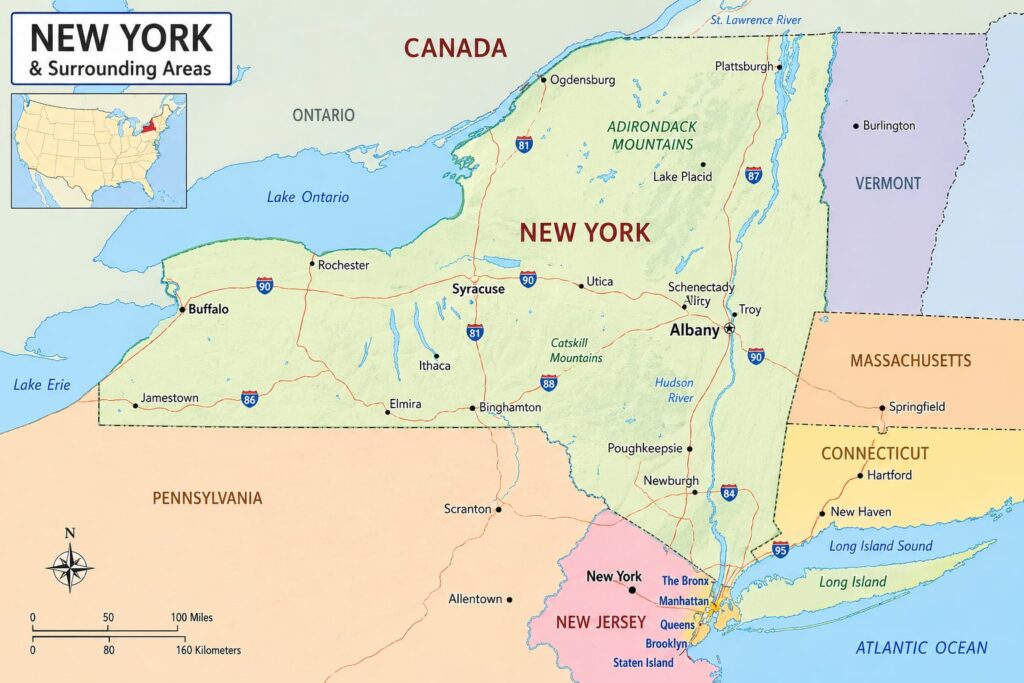
Local SEO refers to the process by which a company optimizes its online presence with the aim of appearing during searches that have “near me” or city-related keywords within them, such as plumber near me, plumber in Troy, NY etc.
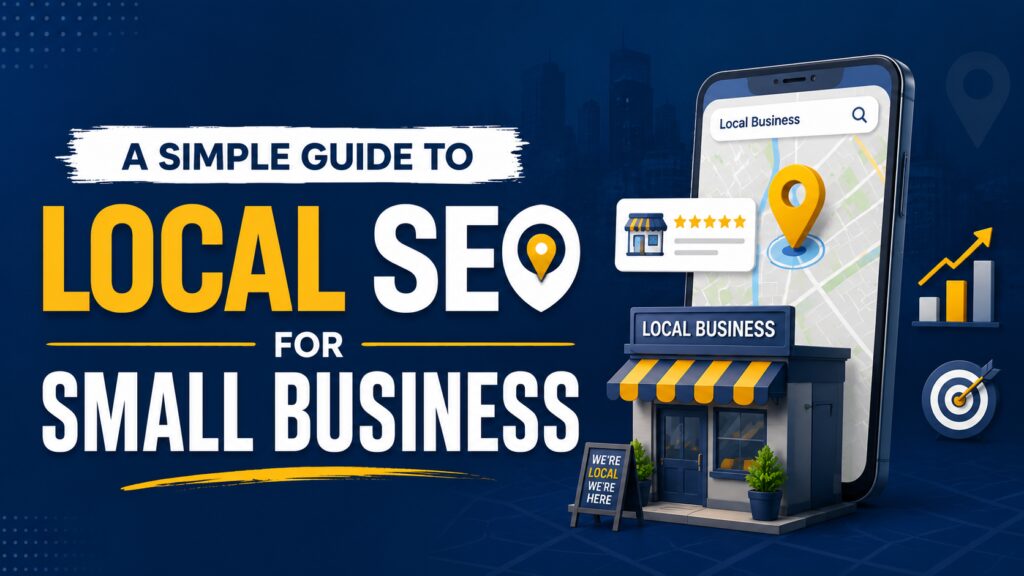
Small business SEO and local SEO intersect; however, while general SEO aims at gaining national or international exposure through organic rankings and backlinks, local SEO focuses on capturing the coveted three-pack of map listings and the “near me” and “in [city]” searches that constitute a major percentage of the traffic directed towards small businesses.
As Google explains in its guide to local SEO and ranking, local results rank based on three criteria:
- Relevance — How relevant your business is to the search
- Distance — The distance from the user (or the location searched)
- Prominence — Your company’s reputation and review presence
Local SEO | Traditional SEO | |
Goal | Rank in map pack + local organic results | Rank in national/global organic results |
Key factor | Google Business Profile + proximity | Domain authority + content depth |
Search intent | “Near me,” “[service] + [city]” | Broad informational or commercial intent |
Best for | Brick-and-mortar, service-area businesses | E-commerce, national brands, publishers |
As a small business with a brick-and-mortar office, or even with a specific service area, you need to give priority to local SEO in your budget.
Why Does Your Small Business Need Local SEO?
This is the truth about why local SEO is necessary for small business owners: you cannot outbid national brands in terms of marketing budget, but you can outrank them in terms of local results. This is because local SEO creates a level playing field where Google rewards those who are closer and more relevant, something which a competing brand cannot offer in your local area.
Almost 50 percent of all searches made on Google have some local intent and the vast majority of people searching for a local business will pay a visit to the same in less than a day. BrightLocal’s Local Consumer Review Survey has revealed time and again that the average consumer checks online reviews before paying a visit to a local business and trusts these as much as personal recommendations.
What Are the True Advantages of Local SEO for Small Businesses?
The advantages of local SEO for small businesses extend beyond just “more traffic.” Here are what the real advantages are when you do it right:
- More qualified foot traffic and calls – those looking at your business locally are almost always ready to make a purchase rather than just browsing
- Free visibility that builds on itself – unlike paid advertising, an effective Google Business Profile works to generate leads for you every day
- Greater trust signals – reviews, citations, and local content establish credibility that convinces doubtful searchers to become customers.
- Improved mobile visibility – most local searches are made on mobile devices, usually while the searcher is out and trying to decide where to go
- An impenetrable moat against competition – once you’re established in the map pack with strong reviews and citations, it’s truly difficult for competitors to displace you.
How to do SEO for Small Business: The Basic Strategy
So, how do you go about doing SEO the right way for your small business? Here are the basics, in the actual order that I would do things for a client.
1. Get Your Google Business Profile Claimed and Optimized
Your GBP (Google Business Profile) is your #1 high-impact property when it comes to local SEO. It’s also free, and probably the very first thing that a prospective customer will see.
Do these things:
- Pick the most precise primary category possible (don’t go with “Restaurant” — use “Italian Restaurant”)
- Complete all information fields: hours, services offered, attributes, and service area.
- Upload photos regularly — businesses with photos get more clicks and directions than those without photos.
- Write an overview including what your business offers and where it operates.
- Post on Google weekly to prove that your profile is alive.
- Answer the questions posed in the Q&A yourself before it’s done by someone else.
2. NAP Consistency
NAP stands for Name, Address, and Phone Number. This should be exactly the same across the board — on your website, your GBP, Yelp, Facebook, industry directories, everything. NAP inconsistencies are one of the most prevalent problems found during a local SEO audit, and these inconsistencies slowly weaken the trust signals used by Google to validate your business is legit.
Conduct an NAP audit at least twice per year. Resolve any conflicts. Claim any unclaimed listings on Yelp, Apple Maps, Bing Places, and other industry specific directories appropriate to your industry.
3. Gain Local Citations & Links
Citation listings are important, but not the end of it. Some of the most powerful local link building campaigns I’ve run for my clients come from sources overlooked by most SEO firms:
Sponsoring a local youth sports team or community event
Becoming a member of your local chamber of commerce (many have backlinks for their members)
Getting covered by local media outlets and/or community blogs
Building relationships with complimentary local businesses for cross promotion
Local authority signals built from these links are second to none.
4. Optimize Your Website With Local Keywords
Here’s where local SEO starts to get granular. You don’t want just to optimize your homepage for “roofing company,” but instead to have separate pages for “roofing company in Colonie, NY” or “emergency roof repair Troy, NY” if you work in several different places.
Integrate location-related keywords in:
Title tags and meta descriptions
- Headings H1 & H2
- Body text (not keyword stuffed, of course)
- Alt text for images
Remember that it’s equally important for you to be getting conversions from those pages as it is to be ranking well for them – that’s why we integrate our lead capture strategy into each one of our campaigns.
5. Include Local Business Schema Markup
This is an element of SEO that most other businesses will completely overlook, to their detriment. Schema markup is simply structured data telling Google all about your business including its location and availability information.
Here is an elementary example for the LocalBusiness schema markup:
{
“@context”:”https://schema.org”,
“@type”:”LocalBusiness”,
“name”:”Your Business Name”,
“image”:”https://yourwebsite.com/photo.jpg”,
“address”:
{
“@type”:”PostalAddress”,
“streetAddress”:”123 Main St”,
“addressLocality”:”Troy”,
“addressRegion”:”NY”,
“postalCode”:”12180″
},
“telephone”:”+1-518-555-0100″,
“openingHours”:”Mo-Fr 09:00-17:00″
}
Add it to your homepage and location pages. It is a tiny technical addition which has a huge effect on how confidently Google displays your business in local results. If your website was created without taking this into account, it might be worth getting your web design checked along with your SEO, because the two are more interrelated than you probably think.
6. Think of Reviews as an Element of Your Marketing Spending Because They Are!
Reviews are surely the most valuable ranking and conversion signals at present. Fresh reviews will always prevail over the old ones.
- Ask your customers for reviews after they had positive experience working with you.
- Answer all reviews you receive, including both positive and negative ones, promptly.
- Never think of purchasing any fabricated reviews because Google will punish you for that actively.
- Go further than just Google and add Yelp, BBB, and other specialized sites to your list.
Valuable Local SEO Tips for Small Businesses that Will Help to Increase Your Ranking
A couple of local SEO advice for small businesses that do not usually get much publicity:
- Optimize mobile load time – slow websites turn away local customers doing searches from their mobile phones.
- Update content and images for GBP on a monthly basis or more often; outdated listings will disappear.
- Set up location pages individually if your company works in different cities; don’t put all locations on one page.
- Check your local pack ranking on a monthly basis using a specialized tool, not by performing manual Google searches.
- Promote relevant reviews mentioning both your services and the location (“excellent HVAC repair in Colonie”).
Does AI Help with Local SEO for Small Businesses?
Yes – and fast. Does AI help with local seo for small businesses? This is one of the questions I get the most these days, and the short answer is yes: AI has really started to be useful when applied properly.
The benefits of AI for small businesses include:
- Competitor content analysis and gap finding in a matter of minutes rather than days.
- Generating and testing several GBP post options quickly.
- Sentiment analysis of reviews on all platforms automated.
- Local keyword ideas generation based on actual search data rather than assumptions.
- Drafting location page content faster – and then having it reviewed and optimized by a human
One of the key mistakes made by many small companies when it comes to using AI is that it somehow replaces the need for strategy, but it does not. Even though it accelerates the process of research and manufacturing, the element of decision making remains crucial and still needs to be done by professionals. That is the main reason why we have implemented SEO powered by artificial intelligence at SEO Leadz.
How much does it cost to get local SEO for my small business?
It’s absolutely a reasonable question to ask. The thing is that everything will depend on your location and level of competition, as well as the situation around. But nevertheless, here’s how the prices may vary according to the level of service you need:
- DIY: inexpensive but time-consuming; it takes 5-10 hours per month
- Freelancer/small firm: $300-$1,500 per month; covers GBP management, basic citation building, reporting
- Agency: $1,500-$5,000+ per month; covers citation building, review management, content creation, schema optimization, and reporting
As we can see, the cost of the services provided for local SEO is dictated by the competition in your market. The sole bakery from a small town has to invest much less money compared to the multilocational business competing in a metropolitan market environment. Obtain a couple of quotes and make sure you are aware of their details. Be careful of those who promise to rank you first in your niche without doing anything extra. They won’t tell you the truth.
Results: How Local SEO Actually Works
The strategy is useless without delivering tangible results. Here’s how it works for some of our actual clients:
Gray’s Auto Services (Colonie, NY) — With the entire local SEO optimization process completed, from the GBP optimization to citations cleanup, Gray’s Auto experienced [X% increase] in the number of listings in Google Maps pack and [X% increase] in phone inquiry volume in [timeframe].
Collins Bistro (Troy, NY) — A review management plan and ongoing GBP work allowed Collins Bistro to increase its number of reservation inquiries by [X%] generated by the “near me” searches in [timeframe].
Capital Realty Group (Albany, NY) — With localized landing pages created and schema markup added, Capital Realty Group increased its organic lead generation volume by [X%], minimizing dependency on PPC advertising in [timeframe].
All of these cases are not a result of theoretical analysis but an outcome of an effective implementation of local SEO strategy over [timeframe].
What Are the Best Local SEO Tactics for Small Businesses?
If there’s anything simple about what the best local seo tactics are for small businesses, it’s this: get your Google Business Profile optimized, ensure your NAP is consistent, get good reviews, build links instead of wasting time on directories, and use schema markup so Google knows exactly what you are. Use AI tools to go fast, but leave the human in charge of strategy.
There isn’t anything difficult about these tactics theoretically. What sets apart the businesses that succeed in ranking from those that don’t come down to consistency – all of them get off to a good start and let their GBP and citations get old in a matter of months. The businesses that succeed are those that maintain their practice of local SEO as a discipline, not a one-off task.
Top Local SEO Screw Ups You Never Realized Were Killing Your Rankings
Here are common errors found after over 20 years of auditing local businesses, that almost everyone running a local business is doing, without even realizing:
- Selecting the wrong main GBP category – this is enough to kill your local ranking chances right away.
- A dormant profile – not posting or uploading any images for months will make it appear inactive to Google.
- NAP inconsistency on old directory sites – when a local business changes location or phone numbers and doesn’t update their old listings.
- Citing cheap, generic, mass citations from poor-quality directories can hurt your ranking chances.
- Not responding professionally to negative reviews but letting them remain without any action.
- Duplicating your content among several location pages and not creating a unique one for each one.
- Considering local SEO to be a one-off task instead of a continual practice – what you earn in months can be lost in days.

Hi, I’m Kashaf Attiq, founder of SEOLeadz. From custom web development and content writing to advanced SEO and guest posting, I turn websites into powerful, lead-generating machines. Stick around for actionable tips, or reach out to scale your business!